Warehouse downtime is one of those problems that sneaks up on you. One minute, everything is running fine, and the next, a forklift is out of commission, a shipment is delayed, and your whole day is thrown off. The frustrating part is that most downtime is preventable. It usually comes down to a few habits that either get followed or get skipped.
This guide breaks down seven practical strategies that warehouse managers and fleet operators can actually use to keep things moving and avoid those costly interruptions.
Keep Critical Spare Parts Stocked On-Site
When a piece of equipment goes down, the clock starts ticking. Every hour spent waiting on a part to ship is an hour of lost productivity. One of the simplest ways to cut that wait time is to keep the most commonly needed parts on-site and ready to go.
Start by looking at your repair history. Which parts have you needed most often in the past year? Filters, brake shoes, seals, and belts tend to top the list for most facilities. For warehouses running Nissan lift trucks, stocking Unicarriers forklift parts means your maintenance team can handle repairs the same day instead of waiting on delivery.
The older your equipment, the more important this becomes since older machines tend to need more frequent part replacements. Even keeping a small, well-organized parts shelf can make a real difference when something breaks down mid-shift.
Build a Preventive Maintenance Schedule
Reactive maintenance is expensive. You wait for something to break, then you fix it. Preventive maintenance flips that around. You service the equipment on a regular schedule, so problems get caught before they turn into breakdowns.
A basic preventive maintenance plan does not need to be complicated. Daily checks can cover fluid levels, tire condition, and any visible damage. Weekly inspections can go a little deeper, looking at brakes, forks, and hydraulic systems. Monthly service can include more thorough checks on engine components, filters, and safety systems.
The goal is to catch the small stuff early. A worn belt or a slow fluid leak is a minor fix when caught early, but left alone, either one can lead to a much bigger repair down the road. Putting this schedule in writing and actually sticking to it is what separates facilities with low downtime from those that are constantly dealing with breakdowns.
Train Your Operators to Spot Problems Early
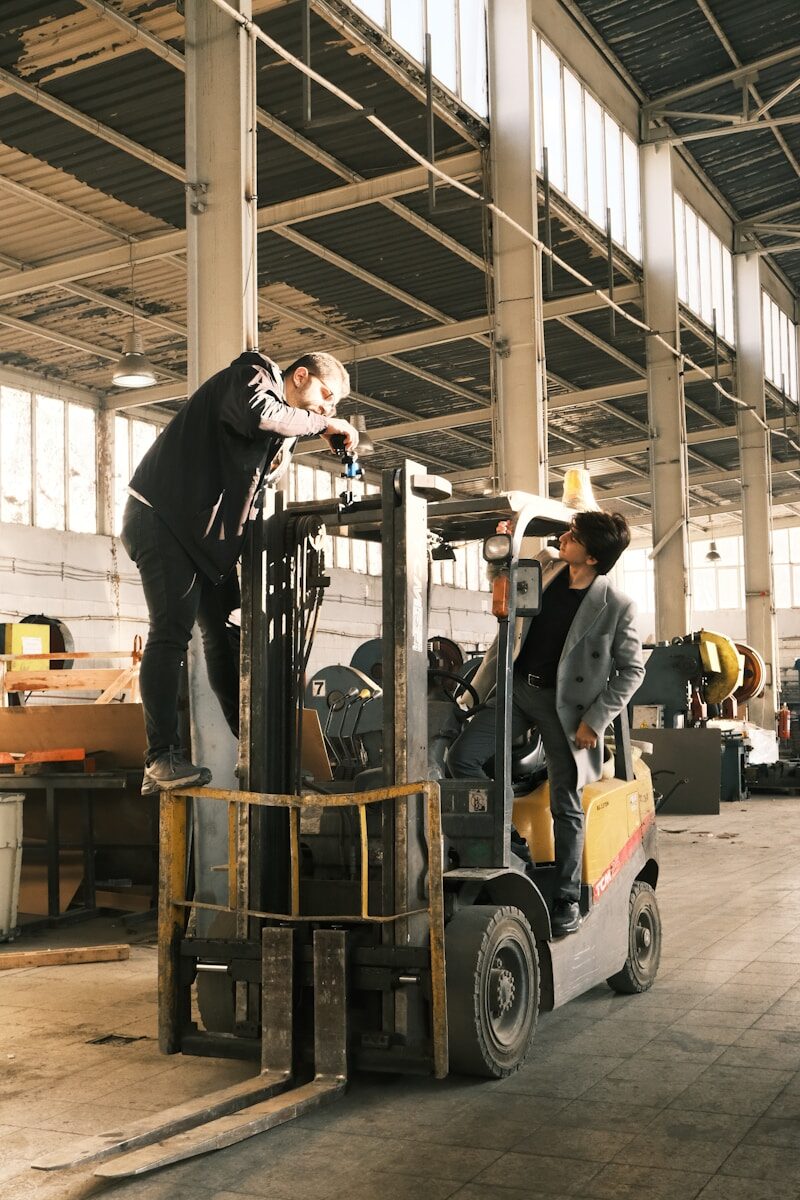
Your forklift operators spend more time on the equipment than anyone else in the building. That puts them in the best position to notice when something feels off. A strange noise, a slight pull to one side, slower lift speeds, these are all early warning signs that something needs attention.
The problem is that operators who have not been trained to look for these things often ignore them or assume it is normal. A quick training session that covers what to check before and after each shift, and what to report immediately, can go a long way. You do not need a formal program. Even a one-page checklist posted in the break room gives your team a reference point. When operators feel like their input matters, they are more likely to speak up when something does not seem right.
Document Every Repair and Inspection
Keeping records might not seem exciting, but it is one of the most useful things you can do for your maintenance program. When you document every repair and inspection, you start to see patterns that are easy to miss otherwise.
Maybe one forklift keeps needing the same brake adjustment every few weeks. That pattern in the records tells you there is a bigger underlying issue that needs to be addressed instead of just repeatedly patched. Good records also help when you bring in outside technicians, since they can see the full history of the machine right away. You do not need expensive software to do this.
A shared spreadsheet or even a paper log kept with each machine works fine as a starting point. The key is consistency. Records only help if they are actually kept up to date.
Rotate Equipment to Distribute Wear Evenly
If your facility has multiple forklifts but one machine gets used constantly while the others sit, you are setting yourself up for a breakdown. Uneven usage means uneven wear, and that one overworked machine is going to need repairs far sooner than it should.
A simple equipment rotation plan spreads that usage across your fleet. It does not need to be complicated. Even alternating which machines get used on different shifts can help balance things out. Your whole fleet stays in better shape, and no single machine takes the brunt of all the wear.
Schedule Downtime on Your Own Terms
Planned warehouse downtime is always better than unplanned downtime. When you schedule maintenance during slow periods, shift changes, or weekend hours, you control when the disruption happens. That is a lot less painful than a breakdown in the middle of your busiest shipping day.
Look at your operation and figure out when the lowest-impact windows are. Block those times for scheduled maintenance and stick to them. Emergency repairs will still come up occasionally, but the more you stay on top of planned servicing, the fewer emergencies you will deal with overall.
Reducing warehouse downtime is not about doing everything perfectly. It is about building small, consistent habits that prevent problems before they start. When your equipment stays operational, and your team stays productive, your business is in a much better position to grow, take on more volume, and deliver consistently for your customers. Pick one or two of these strategies to focus on first, get them working well, and then build from there. Over time, those small changes add up to a much more reliable operation.