
- Key Takeaways
- How Can Tetrahealth Dentistry Help Replace a Missing Tooth?
- What Are Zirconia Dental Implants?
- Why Do Patients Compare Zirconia With Titanium?
- What Benefits Can Zirconia Dental Implants Provide?
- Who May Be a Candidate for Zirconia Dental Implants?
- What Does Research Say About Zirconia Implant Success?
- How Can Patients Protect Their Long-Term Results?
- Questions to Ask Before Requesting Zirconia Implant Treatment
- Frequently Asked Questions
- Can Tetrahealth Dentistry replace more than one missing tooth?
- How does treatment begin?
Key Takeaways
- Zirconia dental implants are ceramic implants made from zirconium dioxide.
- They may appeal to patients seeking a metal-free, tooth-colored tooth replacement option.
- Careful planning is essential because implant material is only one part of a successful treatment plan.
- Research on zirconia implants is promising, but titanium has a larger long-term evidence base.
- Tetrahealth Dentistry coordinates diagnostics, implant planning, healing, restoration design, and maintenance.
A missing or failing tooth can affect more than a smile. It may change chewing patterns, place added stress on neighboring teeth, and contribute to changes in the bone and gums that support the area. For patients exploring a ceramic alternative, zirconia dental implants at Tetrahealth Dentistry offer a carefully planned, metal-free approach to tooth replacement.
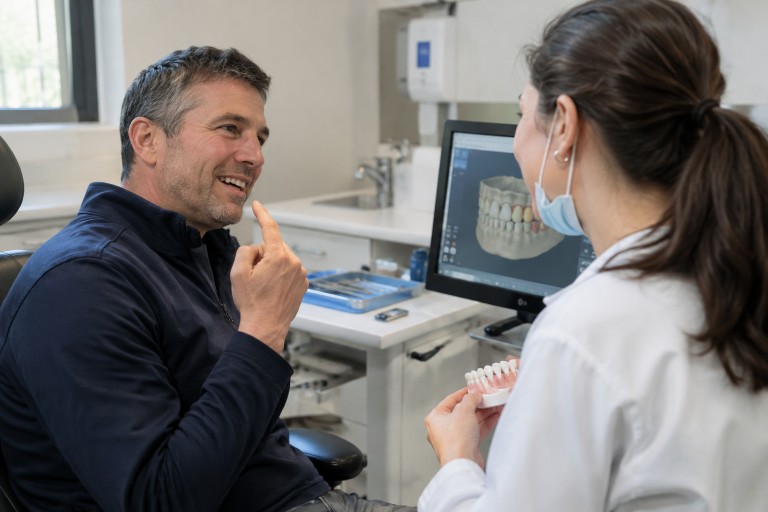
Tetrahealth Dentistry evaluates the full oral system before recommending treatment. A zirconia dental implant request is best understood as the beginning of a diagnostic conversation, not a decision that can be made by material preference alone. Anatomy, bone volume, gum health, bite forces, medical history, and restoration goals all matter.
How Can Tetrahealth Dentistry Help Replace a Missing Tooth?
Tetrahealth Dentistry approaches implant treatment as a process of restoring structure, function, tissue support, and appearance. The goal is not simply to fill a visible gap. An implant-supported crown must also fit the available bone, work within the patient’s bite, and allow the gums to heal and remain maintainable over time.
For appropriate candidates, a zirconia implant may replace the root portion of a missing tooth. After healing and integration with the surrounding bone, the implant supports a custom restoration. The final treatment plan may also involve extraction, temporary tooth replacement, bone preservation, gum augmentation, or bite management.
What Are Zirconia Dental Implants?
Zirconia implants are dental implants made from zirconium dioxide, a high-strength ceramic. Unlike conventional titanium implants, zirconia implants are metal-free and naturally white or tooth-colored. This can be especially relevant in visible areas where thin gum tissue could make a darker underlying material more noticeable.
Implant treatment generally includes surgical placement, a healing period for bone and soft-tissue adaptation, and placement of a custom crown. Not every missing-tooth site is suitable for every implant design. Tetrahealth Dentistry considers the position of the tooth, available space, bone contours, tissue thickness, and expected chewing forces before recommending a ceramic implant.
Why Do Patients Compare Zirconia With Titanium?
Both zirconia and titanium implants can be used to support replacement teeth. The comparison is not just about appearance. It involves material preference, clinical evidence, implant design, restorative requirements, and the patient’s individual risk factors.
| Factor | Zirconia Implants | Titanium Implants |
| Material | Metal-free ceramic | Metal alloy |
| Color | White or tooth-colored | Metallic beneath the restoration |
| Evidence base | Promising and still developing | Broader long-term research base |
| Planning needs | Careful attention to forces and design | Individualized planning and maintenance |
Zirconia should not be presented as automatically better for every patient. Its rigidity and design characteristics make case selection important, particularly where space is limited or bite forces are high. Titanium may remain the more appropriate choice in some situations, while zirconia may be a strong option for selected patients seeking a ceramic implant.
What Benefits Can Zirconia Dental Implants Provide?
- Metal-free treatment: Zirconia provides a ceramic alternative for patients who prefer to avoid metal implants.
- Natural-looking material: Its white color may support aesthetic planning near the gumline.
- Restored chewing support: A properly designed implant crown can help replace a missing tooth’s function.
- Customized care: The restoration, tissue plan, and surgical approach can be tailored to the individual site.
- Coordinated planning: Surgical and restorative decisions can be made together rather than treated as separate steps.
No implant material eliminates the possibility of inflammation, infection, mechanical complications, or implant failure. Results depend on surgical technique, tissue health, oral hygiene, implant design, restoration fit, bite forces, regular professional care, and patient-specific health factors.
How Does Tetrahealth Dentistry Plan a Zirconia Implant Case?
- Comprehensive evaluation: The team reviews the missing or failing tooth, neighboring teeth, gums, bone, bite, health history, and goals.
- Digital planning: Three-dimensional imaging and digital scans help assess bone volume, nerves, sinuses, and restorative space.
- Site preparation: If needed, extraction, bone preservation, or gum treatment may be planned before implant placement.
- Implant placement: The zirconia implant is placed according to the surgical and restorative plan.
- Healing and restoration: After appropriate healing, a customized crown is designed to support appearance and function.
- Maintenance: Follow-up appointments monitor tissue health, bite forces, restoration condition, and hygiene needs.

Who May Be a Candidate for Zirconia Dental Implants?
Potential candidates include adults with one or more missing teeth, healthy or treatable gum tissue, sufficient bone support, and a willingness to follow home-care and follow-up recommendations. Patients with limited bone may still be candidates if regenerative treatment is appropriate.
Additional evaluation is particularly important for people with untreated gum disease, smoking habits, uncontrolled medical conditions, heavy clenching or grinding, poor oral hygiene, limited restorative space, or unrealistic expectations. A consultation is necessary to determine whether zirconia, titanium, a bridge, or another option best fits the case.
What Does Research Say About Zirconia Implant Success?
Current evidence supports cautious optimism. A systematic review and meta-analysis of commercially available zirconia implants estimated a mean five-year survival rate of 97.2 percent among the included studies, while also concluding that better-designed prospective and comparative studies are needed.
Long-term findings are also emerging. A 10-year prospective multicenter study of one-piece zirconia implants reported an estimated survival rate of 97.7 percent, but the study involved a limited number of implants available for the final evaluation. These figures describe specific study populations and systems. They are not a guarantee of an individual outcome.
How Can Patients Protect Their Long-Term Results?
An implant cannot develop a cavity, but the gum and bone around it can still become inflamed or infected. Daily brushing, interdental cleaning, professional hygiene visits, and prompt evaluation of discomfort, bleeding, swelling, looseness, or bite changes all support long-term maintenance.
Tetrahealth Dentistry also monitors healing, tissue stability, crown condition, and force distribution. This matters because a well-integrated implant still needs a restoration and bite relationship that can function predictably over time.
Questions to Ask Before Requesting Zirconia Implant Treatment
- Which implant design is recommended, and why?
- What does the three-dimensional scan show about bone and anatomical risks?
- Will treatment require extraction, grafting, gum treatment, or a temporary tooth?
- Who will place the implant and design the final crown?
- How will clenching, grinding, and bite forces be managed?
- What are the stages of treatment, healing expectations, maintenance needs, and alternatives?
Frequently Asked Questions
Are zirconia dental implants as strong as titanium implants?
Zirconia is a strong ceramic material, but it behaves differently from titanium. The appropriate choice depends on the implant site, available space, implant design, bite forces, and restoration plan.
How long can zirconia dental implants last?
Longevity varies by patient and treatment design. Research reports encouraging survival outcomes for selected zirconia implant systems, but long-term success also depends on tissue health, maintenance, oral hygiene, and force control.
Can Tetrahealth Dentistry replace more than one missing tooth?
Depending on the clinical evaluation, implant care may involve a single missing tooth, several missing teeth, or a more extensive restorative plan. The recommended approach should be based on the patient’s anatomy and functional needs.
How does treatment begin?
Treatment begins with a consultation and diagnostic evaluation. Tetrahealth Dentistry can then explain candidacy, risks, alternatives, anticipated stages of care, and the material options that best support the patient’s long-term goals.
Also read Dental Implants: A Comprehensive Guide to Modern Tooth Replacement Options

Be First to Comment