
Dental implants have transformed dentistry by providing a durable, natural-looking solution for patients aiming to restore their smile and oral function. Whether you’ve lost a tooth due to injury, decay, or age, understanding your tooth replacement options is essential for making the best choice for your dental health and overall well-being.
Unlike traditional dentures or bridges, dental implants are designed to closely mimic natural teeth in appearance, feel, and function. This guide explores how dental implants work, their key benefits, the various types available, and what you need to know about the procedure, candidacy, and aftercare to achieve lasting results.
The evolution of dental implants means patients no longer have to settle for uncomfortable or ill-fitting removable teeth. Instead, implants provide a secure and permanent base for new teeth, benefiting those seeking a highly functional and aesthetic restoration. In addition to preserving facial structure and preventing bone loss, dental implants also support improved confidence and ease of daily activities like eating and speaking.
As you weigh your options, keep in mind that advances in dental implant technology allow for highly personalized solutions tailored to your oral anatomy and specific needs. Taking the time to learn about your choices will help you make decisions with your dentist that align with your health goals and lifestyle.
What Are Dental Implants?
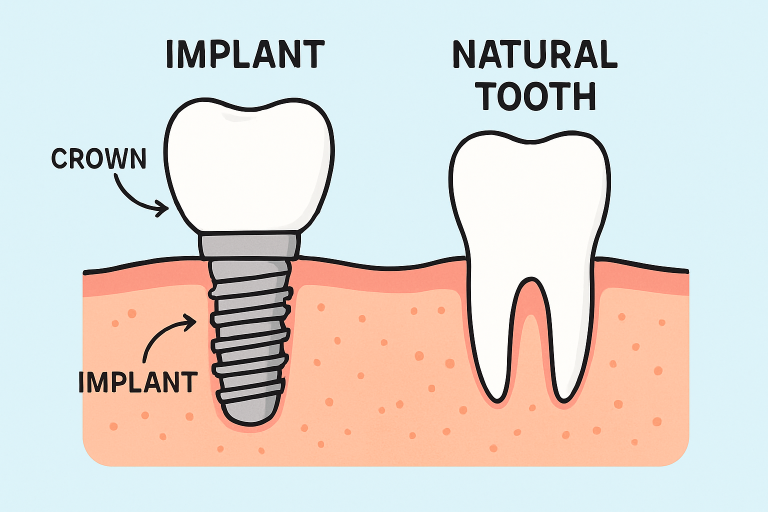
Dental implants are artificial roots made from biocompatible materials, often titanium, which are surgically inserted into the jawbone. These implants act as sturdy anchors for prosthetic teeth, such as crowns, bridges, or dentures, effectively restoring appearance and essential dental function.
This innovative approach has made dental implants the gold standard in restorative dentistry, offering a permanent base that integrates with your natural bone.
Benefits of Dental Implants
- Long-lasting results: With diligent oral care, many implants last for decades, providing value over time.
- Natural look and feel: Implants are custom-designed to blend seamlessly with your remaining teeth.
- Enhanced comfort and stability: Implants are anchored to the jaw, eliminating slipping or shifting.
- Improved oral health: Replacing missing teeth with implants helps maintain gum and bone structure and does not require adjacent teeth to be altered or filed down.
- Restored confidence and function: Patients speak clearly and chew with ease, regaining everyday normalcy.
Types of Dental Implants
Multiple types of dental implants are available, each tailored to specific dental scenarios:
- Endosteal implants: These are placed directly in the jawbone and are most commonly recommended for patients with sufficient bone density.
- Subperiosteal implants: Positioned under the gum tissue but above the jawbone, they are suitable when bone height is insufficient or reconstruction is not an option.
- All-on-4:This approach secures a full arch of prosthetic teeth on four strategically placed implants, often enabling faster restoration. Find out more about the All-on-4 technique.
- Root analogue implants: Custom-made to mimic the shape of a recently extracted tooth root, these allow for immediate implant placement with a personalized fit.
The Dental Implant Procedure
Receiving dental implants generally involves several steps:
- Consultation and planning: Your dentist examines your oral health, takes X-rays or 3D scans, and devises a treatment plan tailored to your needs.
- Implant placement: Under local or general anesthesia, the implant is surgically inserted into the jawbone.
- Healing and osseointegration: Over several months, the bone fuses with the implant, creating a stable support for the artificial tooth.
- Abutment attachment: Once healing is complete, an abutment is fixed to the implant post. This serves as the connector between the implant and the prosthetic tooth.
- Restoration placement: The final crown, bridge, or denture is attached, completed to match your natural teeth.
Candidacy for Dental Implants
Most healthy adults are suitable candidates for dental implants, particularly those with:
- Good oral health and stable gum tissue.
- Sufficient jawbone density to anchor the implant.
- No untreated chronic conditions, such as uncontrolled diabetes or active periodontal disease.
If jawbone volume is inadequate, bone grafting or alternative techniques may be recommended by your dental provider.

Cost Considerations
The total cost for dental implants varies widely, depending on factors such as the number of implants, the need for additional procedures, and geographical location. Typically, a single implant ranges from $3,000 to $4,500, while complex full-arch restorations can reach $60,000 or more.
Insurance may partially cover related procedures, but comprehensive coverage is rare. Exploring financing or payment plans with your provider can help manage costs.
Aftercare and Maintenance
Maintaining dental implants is vital for their success. You should:
- Brush twice daily and floss carefully around the implant site.
- Attend regular professional cleanings and checkups to monitor gum and bone health.
- Avoid chewing very hard items, such as ice or hard candies, to prevent fracture or loosening of the implant.
Adhering to your dentist’s aftercare instructions helps ensure implants remain secure and functional for many years.
Potential Risks and Complications
The success rate of dental implants is typically high, but no surgical procedure is without risk. Some potential complications include:
- Infection at the surgical site, which may require antibiotics or additional treatment.
- Damage to adjacent teeth or blood vessels during placement.
- Nerve injury, resulting in pain, numbness, or tingling around the lips, gums, or chin.
- Problems involving the sinuses when implants are placed in the upper jaw.
Discussing your medical history and concerns with an experienced dental professional will further reduce risk and help you make informed decisions about your care. Choosing dental implants can greatly enhance your quality of life, offering unmatched stability, aesthetics, and function.
Educate yourself with resources, consult with trusted professionals, and make the choice best suited for a confident, healthy future.
Conclusion
Dental implants have become a leading solution for restoring both the function and appearance of missing teeth, offering patients a reliable and long-term alternative to traditional options.
From understanding the different types of implants to evaluating candidacy, costs, and aftercare, being well-informed is key to achieving successful outcomes. Their ability to integrate with the jawbone not only provides unmatched stability but also supports overall oral health by preserving bone structure and preventing further complications.
While the procedure requires careful planning and ongoing maintenance, the benefits, ranging from improved confidence to enhanced daily comfort, make dental implants a worthwhile investment. By working closely with a qualified dental professional and maintaining consistent oral hygiene, patients can enjoy durable, natural-looking results that significantly improve their quality of life for years to come.