Key Takeaways
- Proper posture is essential for optimal muscle and joint health.
- Poor posture may cause long-term issues such as chronic pain and reduced mobility.
- Many daily habits and lifestyle factors cause postural changes.
- Applying simple daily habits can noticeably improve posture and well-being.
Posture extends far beyond just standing straight. It affects how we move, feel, and interact with our environment day after day. Many people are unaware that subtle shifts in how we carry ourselves can accumulate over time, leading to meaningful changes in health, comfort, and daily function.
When managing chronic conditions or mobility challenges, finding supportive solutions such as a wheelchair for POTS patients can be a crucial aspect of maintaining healthy posture and quality of life.
Our posture is an outcome of our habits, environment, and even our emotional well-being. Small changes to our workspaces, routines, or self-awareness can pay substantial dividends in daily comfort and self-confidence, paving the way for better mobility and long-term prevention of pain. Addressing posture proactively ensures that we preserve our physical and mental health for years to come.
The Connection Between Posture and Physical Health
Maintaining proper posture is critical for musculoskeletal health. The alignment of the spine, shoulders, and hips determines how stress is distributed through muscle groups and joints. When people regularly slouch or slump, it causes uneven distribution of muscular effort, leading to fatigue and often resulting in discomfort or pain.
Over time, chronic misalignment can contribute to the development of long-term issues such as back pain, joint stiffness, and even conditions like arthritis. According to Harvard Health, maintaining healthy posture reduces the risk of strain-related injuries and helps preserve the body’s flexibility and balance.
Good posture also plays a critical role in preventing injury during exercise and other physical activities. Individuals who maintain proper body alignment may experience enhanced performance in sports or recreational activities, as their muscles can function more efficiently and with reduced risk of strain.
Athletes, dancers, and fitness enthusiasts often report that proper posture is essential not just for aesthetics, but for long-term athletic health. Even for those who don’t participate in organized sports, everyday activities like carrying groceries, lifting children, or cleaning the house become less burdensome and safer with strong postural habits.
Common Causes of Postural Changes
Numerous daily habits and lifestyle factors promote changes in posture. Chief among them are:
- Prolonged Sitting: Remaining seated for hours at a time, especially in poorly designed chairs, creates muscle imbalances and reinforces slouched postures. This is most commonly seen in those with sedentary occupations.
- Technology Use: The growing dependence on smartphones, tablets, and computers has led many people to unconsciously adopt a forward head position and rounded shoulders, which places extra strain on the upper back and neck.
- Stress: Emotional and psychological stressors are frequently expressed physically. Heightened tension in the shoulders and back, as well as a tightened posture, can occur as a manifestation of underlying stress.
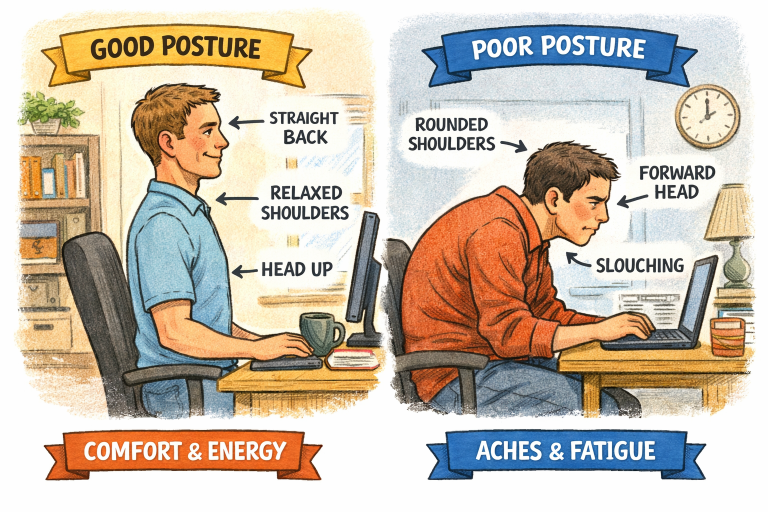
Environmental factors, such as the design of your car seat or the quality of your mattress, can subtly alter how your body is positioned throughout the day and night. Repeatedly carrying heavy bags on one shoulder, wearing unsupportive shoes, or even sleeping in awkward positions may gradually steer your body away from alignment, reinforcing unhelpful habits unless actively addressed.
Genetics can further play a role in spinal shape or susceptibility to certain postural tendencies, but awareness and intervention are key in most cases.
Impact on Daily Activities
Improper posture has far-reaching consequences beyond aesthetics. Tasks as basic as walking, lifting objects, or getting up from a seated position become more challenging when muscles must compensate for misalignment. One often overlooked consequence is restricted breathing.
Slumped posture compresses the diaphragm and reduces lung capacity, which can result in lower oxygen intake and decreased energy. Poor posture can also make balance more difficult, compounding risks for slips or falls in everyday life.
In the workplace, poor posture is a major contributor to lost productivity, worker discomfort, and increased absenteeism. People with consistently bad posture may have higher incidences of headaches, neck pain, and even digestive issues, as compression in the torso can affect internal organs over time.
Daily life is simply more enjoyable and less fatiguing when muscles, joints, and organs are all functioning at their best, thanks to efficient postural habits.
Psychological Effects of Posture
There is substantial evidence linking posture to mental health. Adopting an upright, open posture has been shown to boost mood and increase self-confidence. Conversely, spending extended periods in closed, slumped positions can negatively affect mental state and may play a role in worsening symptoms of anxiety or depression.
A Harvard Health article explores how improving body alignment can be an effective strategy for supporting mental well-being.
Beyond confidence, our posture may influence how others perceive and interact with us in social and professional contexts. Standing tall with your shoulders back can project competence and approachability. For students, proper posture may even have academic benefits, such as increased focus during study and better listening skills in class.
Children and adolescents can also benefit significantly from education on posture, establishing lifelong habits early, and reducing their risk for pain or injury as adults. Parents, teachers, and role models all play a part in shaping these behaviors.
Strategies to Improve Posture
Enhancing posture is achievable with focused, consistent changes to daily routines:
- Ergonomic Workspaces: Invest in a chair and desk setup that encourages a neutral spine and shoulders. Monitor screens should be at eye level, and feet should rest flat on the floor.
- Regular Movement: Make it a point to take short breaks at least every hour. Stand, stretch, and change positions frequently to prevent muscle stiffness.
- Strengthening Exercises: Core and back muscle strengthening are particularly valuable for providing the stability and support needed for good posture. Simple movements, such as planks or reverse flys, can be beneficial.
- Mindfulness Practices: Activities like yoga, Pilates, and tai chi help heighten bodily awareness, encouraging natural, aligned posture. These practices have the added benefit of reducing stress and boosting mood.
Adopting a proactive approach by setting reminders or using posture-tracking devices can also make a notable difference. Some people find that wearing posture-supporting braces or using stability balls in place of traditional chairs serves as a practical reminder to maintain alignment.
For children or seniors, making posture-training a part of daily routines, through games or simple exercises, can foster body awareness without feeling overwhelming. Even small steps, like practicing deep-breathing exercises or stretching after waking, can be incorporated to slowly build a stronger postural foundation.
When to Seek Professional Help
If discomfort or pain related to posture persists, in spite of making lifestyle adjustments, consulting a healthcare professional is recommended. Physical therapists, occupational therapists, or chiropractors can assess the root causes of posture-related issues and design personalized interventions to improve mobility, comfort, and daily function.
In more complex scenarios, such as after an injury or surgery, a tailored rehabilitation plan may be needed to retrain weaker muscles and improve postural alignment.
Professionals can also advise on adaptive equipment and assistive technologies for people with chronic conditions, disabilities, or age-related difficulties that make maintaining healthy posture more challenging. Early intervention helps prevent further complications and supports greater independence and quality of life.
Conclusion
Developing and maintaining mindful posture habits can profoundly enhance health, comfort, and self-confidence. By taking small, actionable steps, such as modifying your workspace, including movement breaks, and practicing body awareness, you can safeguard your well-being for years ahead. Proactive attention to posture is a simple, yet powerful, investment in both physical and mental health.
While the journey to better posture is continuous, the cumulative benefits are far-reaching and well worth the effort. With patience, self-compassion, and the right strategies, anyone can improve their alignment both for immediate comfort and for long-term resilience. Whether your goals are greater mobility, reduced pain, improved mood, or simply moving through life more easily, prioritizing posture is a wise and rewarding choice for everyone.