
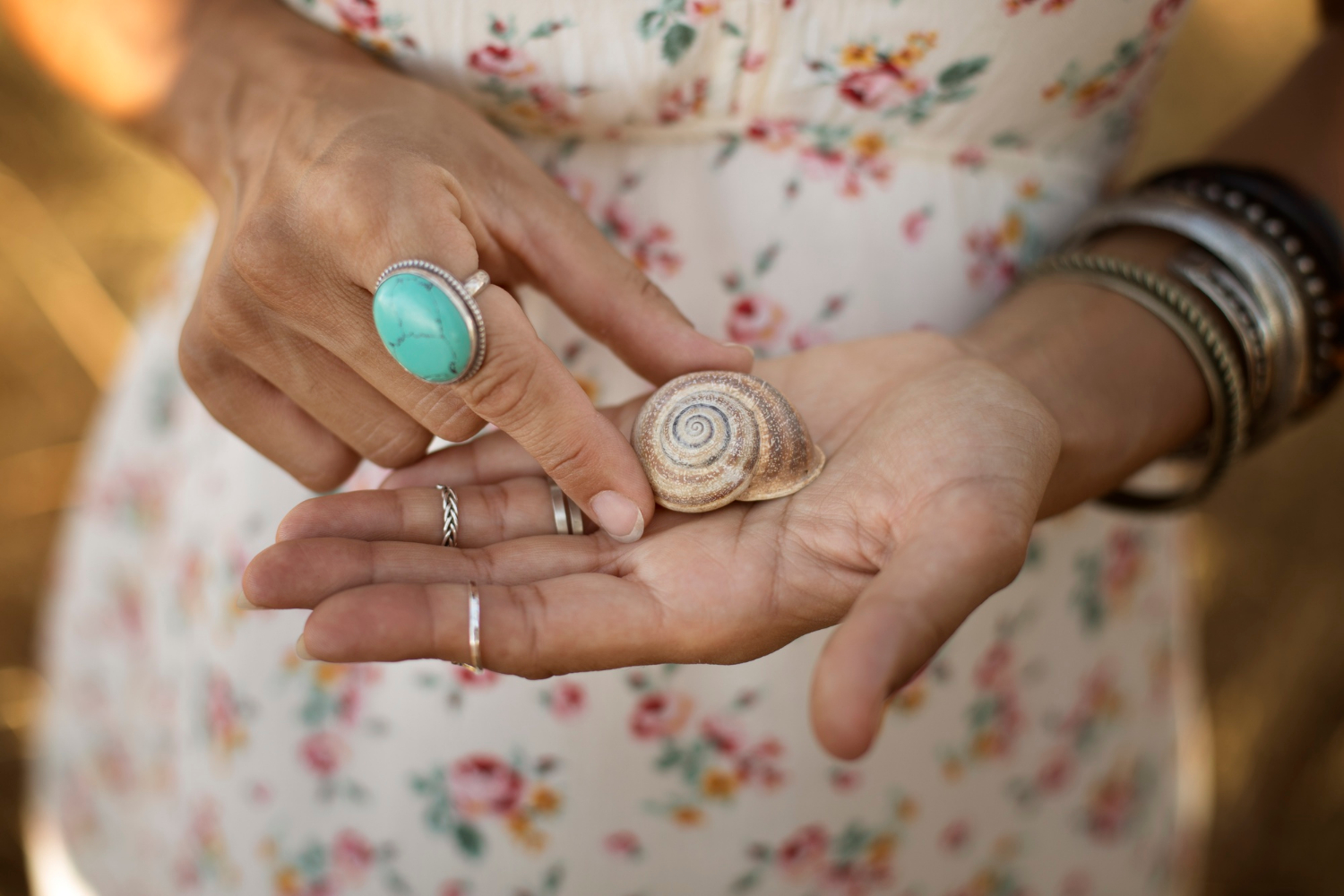
Most of us think of mindfulness as something we schedule: a meditation session, a breathing practice, ten minutes in the morning before the day takes over. And those intentional practices matter. But some of the most accessible mindfulness anchors are the ones woven into ordinary moments, the things we already carry with us.
What if the jewelry you wear could be one of them?
The Idea Behind Object-Based Mindfulness
Mindfulness is fundamentally about conscious attention. It’s the practice of returning awareness to the present moment rather than running on automatic. And while breath and body are the most widely taught anchors, any sensory experience that calls you back to the present can serve the same function.
Objects have been used this way across cultures for centuries. Mala beads in Buddhist and Hindu traditions. Rosaries in Catholic practice. Worry stones in folk traditions across the world. The physical presence of an object, its weight, texture, and the ritual of touching it, creates a sensory interruption in mental autopilot.
Jewelry works similarly when it’s chosen and worn with that intention. The cool weight of a stone against your skin. The moment of noticing light move through it. These are tiny, repeatable invitations to be present.
Why Opalite Jewelry Has a Particular Quality for This Practice
Not all stones create the same quality of attention. Opalite has a visual character that’s unusually well-suited to mindful awareness.
Opalite is a translucent glass stone with a milky, luminous quality. In certain lights, it glows with a soft blue or lavender iridescence. In other lights, it appears warmly white, almost like captured moonlight. It shifts depending on how you hold it, how the light falls, and where you are.
This changeability is exactly what makes it valuable as a mindfulness object. You can look at the same opalite stone a hundred times and see something slightly different each time. That quality actively demands present attention. You can’t glance at it absently and see everything it has to offer. You have to actually look, actually notice, actually be there.
There’s also a softness to opalite that feels different from harder, more reflective stones. It invites rather than demands attention, which is precisely the quality that makes it a gentle rather than effortful mindfulness anchor.

Simple Practices to Build Around Your Opalite Jewelry
You don’t need a structured protocol for this. The point is to find organic moments throughout the day where the jewelry becomes a return to presence.
Morning intention setting. When you put the piece on, take five seconds to actually notice it. Feel its weight. Look at how the light moves through it. Set a quiet intention for the day. This doesn’t need to be elaborate. It just needs to be conscious rather than automatic.
Touch and notice throughout the day. When you’re waiting in a queue, sitting in a meeting that doesn’t require your full attention, or simply have a moment between tasks, bring your awareness to the jewelry. Notice the temperature of the stone. Feel its surface. This micro-practice takes seconds and interrupts the habitual mental drift toward future worry or past review.
Emotional reset signal. When you notice you’re in a spiral of stress or anxiety, touching the jewelry and taking three conscious breaths can serve as a physical anchor back to the present. The physical sensation breaks the mental pattern enough to create a small but useful pause.
Evening release ritual. When you take the jewelry off, let it be a deliberate transition rather than a mechanical act. Notice how the day felt. Set down not just the jewelry but the weight of what’s done.
For anyone drawn to this practice, the opalite jewelry collection at Le Serey offers pieces designed with the kind of simplicity and visual depth that supports rather than distracts from this quality of attention. Their settings allow the stone’s natural character to be the focus, which matters when the stone itself is the anchor.
According to research published in the Journal of Positive Psychology on savoring and mindfulness, deliberately attending to positive sensory experiences in daily life, a practice known as savoring, significantly increases well-being and reduces the impact of stress over time. Wearing a piece of jewelry mindfully is a form of this practice applied to the everyday.
The Deeper Purpose: Making Ordinary Moments Count
The most powerful mindfulness shifts aren’t usually the result of adding another formal practice to an already full life. They come from learning to find genuine presence within what’s already there.
A piece of jewelry that you’ve chosen intentionally, that carries a quality that rewards attention, that you wear daily and touch often, is one of the smallest and most sustainable mindfulness tools available. It doesn’t require an app, a schedule, or a quiet room.
It just requires the willingness to notice, and a stone that gives you something worth noticing.
Conclusion
Mindfulness doesn’t have to be separate from daily life to be real. The most accessible practices are often the ones that meet us in the middle of ordinary moments and call us back to ourselves.
Opalite jewelry, worn with even a small degree of conscious intention, can be one of those practices. Not because the stone has mystical properties, but because its visual depth and gentle presence create exactly the conditions for the kind of quiet, repeatable awareness that genuine mindfulness is built from.


