Kitchen renovations live or die on the details. Cabinets and countertops set the foundation, but lighting and hardware decide whether the room feels finished or half done. Both categories get pushed to the end of a renovation budget, yet they carry more visual weight per dollar than almost anything else in the room.
Layer Your Kitchen Lighting
A kitchen needs three lighting layers to work well: ambient, task, and accent. Ambient light fills the room from overhead fixtures or recessed cans. Task light targets countertops, the stove, and the sink so you see clearly while you work. Accent light, often inside glass cabinets or above upper shelving, adds depth once the sun goes down. Skipping any one layer leaves the room either flat and shadowless or too dim to cook in comfortably.
Get the Island Pendants Right
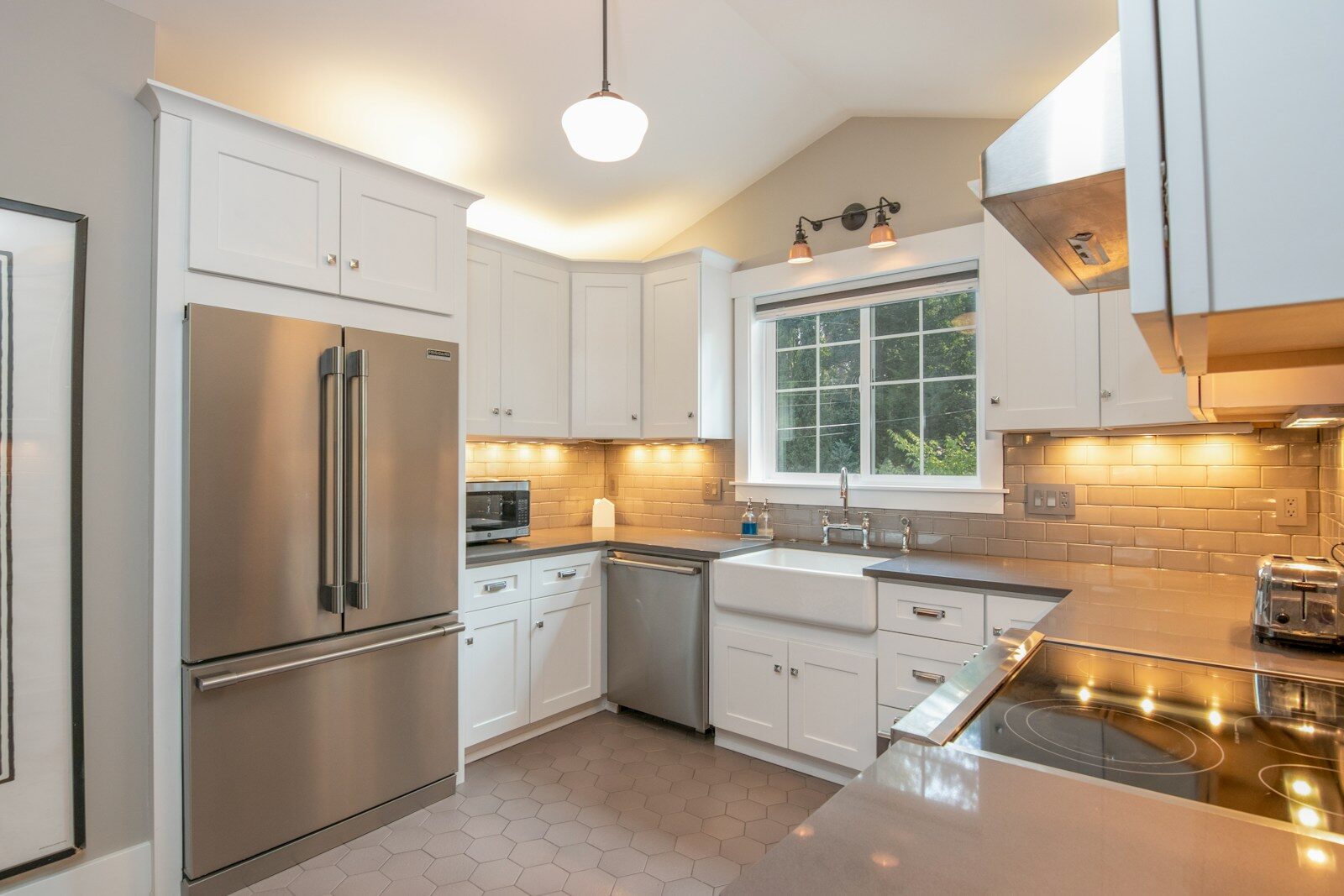
Pendant lights over an island do double duty as task lighting and as the visual centerpiece of the room. A general rule puts one pendant per two feet of island length, so a six-foot island suits three evenly spaced fixtures. Hang the bottom of each pendant 30 to 36 inches above the countertop. Two larger pendants read as more current than three small ones on a wide island, so consider scale before committing to a count.
Undercabinet Lighting Carries More Weight Than You Think
Undercabinet fixtures light the countertop directly below eye level, cutting shadows cast by your own body while you chop or prep food. LED light bars give even, continuous coverage across a full run of cabinets, while puck lights create focused pools better suited to a coffee station or display shelf. Warm white bulbs in the 2700K to 3000K range suit most kitchens, though white or grey countertops read cleaner under 3000K to 3500K.
Choosing Cabinet Hardware
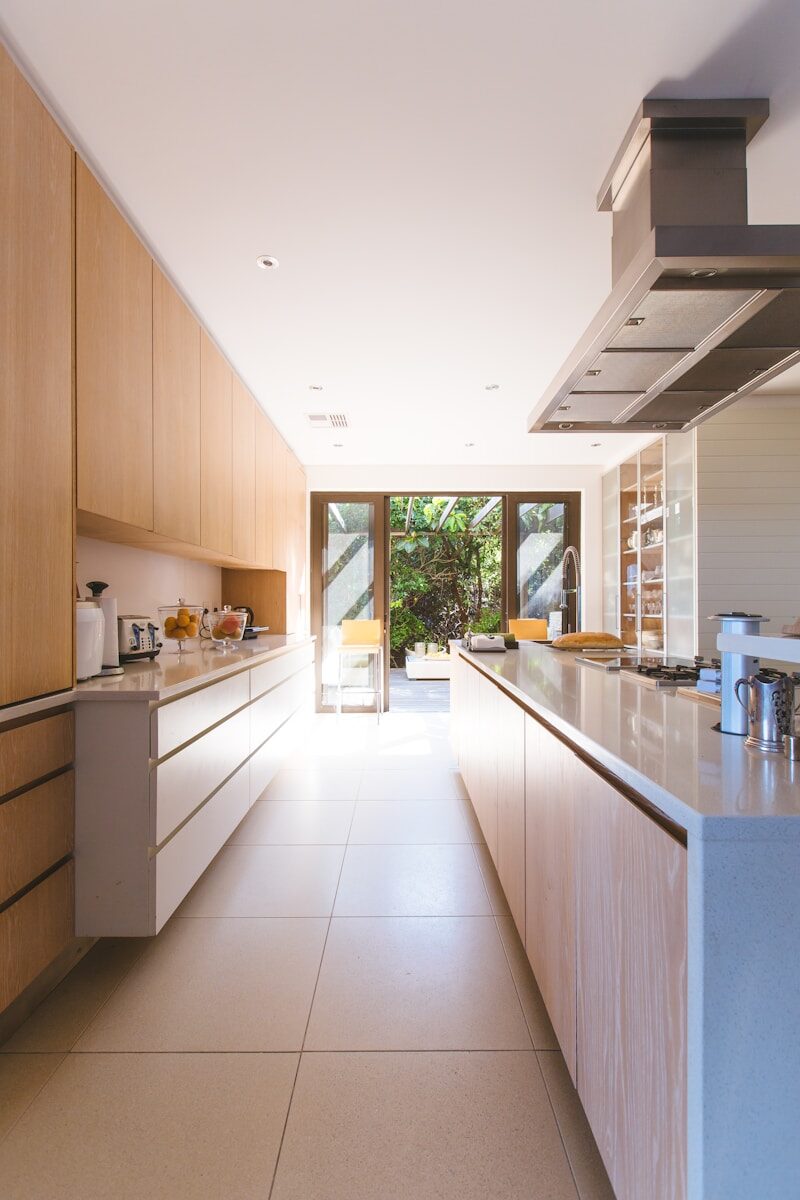
Knobs and pulls change the entire feel of a kitchen for a fraction of the cost of new cabinets. Pulls work best on drawers and larger doors, since they give your hand more to grip. Knobs suit smaller doors and upper cabinets where a full pull would look oversized. Standard pull spacing for a 24 inch drawer runs about 3 to 4 inches from the edge, though wider drawers often carry two pulls for a more finished look.
Match Metals With Intention
Cabinet hardware, faucets, and pendant finishes do not need to match exactly, but they do need to relate. Brushed nickel hardware paired with a matte black faucet works when both read as cool, contemporary tones. Aged brass hardware next to polished chrome fixtures tends to fight rather than complement. Pick one dominant metal for hardware and fixtures, then use a second metal sparingly as an accent, in a light fixture or a single statement faucet.
Common Mistakes to Avoid
Buyers often focus on kitchen lighting where the room is lit from a single overhead fixture and stop there, leaving countertops in shadow no matter how bright the ceiling gets. Others choose hardware finish before confirming the choice against the actual faucet and appliance finishes in the room, then find a mismatch after installation. Take a sample of your chosen hardware finish and hold the sample against your faucet and cabinet color in daylight before ordering in quantity.
Where to Shop
Montreal Lighting & Hardware carries a kitchen lighting and hardware collection, grouping island pendants, undercabinet fixtures, and cabinet pulls together in one place, with finish and sizing details listed on every product page. Shopping kitchen lighting and hardware from the same source keeps finishes consistent across the room with less guesswork.
A kitchen renovation succeeds or fails on layers most people never notice directly, the light positioned where the work happens and the hardware feel in your hand every day. Getting both right pays off long after the bigger ticket items fade into the background.
Also read:
The 8 Essential Steps to a Successful Home Renovation