
I grew up with lots of lovingly delivered good advice and life lessons from my mom, grandma, and uncles that bordered on the idealistic. I didn’t always take it seriously. But you know what they say — when the student is ready.
So it was with me. Over the years, though, what I learned was reinforced, predictably, by movies, songs, books, and real-life examples. Good advice is not easy to take. Yet, what a miracle it is when a movie with actors we love and its songs becomes deeply embedded in our hearts!
While I find it hard to pick among my long list of favorites — I have a penchant for philosophical songs — many songs instantly bring tears to my eyes. One in particular never fails to make me cry and choke me up with emotion.
Life Lessons from a Bollywood Movie Song
This old Bollywood song shaped my attitude toward life and taught me valuable life lessons,
strengthened by the two people I loved most.
I am not religious, although I do pray, thanks to growing up with a routine that included chanting hymns and slokas. This song, however, is a beautiful blend of humanity and goodness. It is from the movie Do Aankhen Barah Haath, one of Bollywood’s all-time hits from 1957, a landmark year in Indian cinema with many iconic classics making box-office history and winning several international awards.
Do Aankhen Barah Haath, or Two Eyes, Twelve Hands, a masterpiece directed by V. Shantaram, is referred to as a cult classic. The movie was inspired by a real-life ‘open prison’ experiment in Swatantrapur, Maharashtra, by Maurice Frydman, who refused to have his name credited in the film. He even threatened to sue the movie maker if his name appeared in the movie.
The story is about Adinath, a young progressive-minded jail warden who believes that six dangerous criminals who have been released on parole should be rehabilitated and not punished. He takes them to a remote ramshackle farm in the country and puts them to work on the land. Through his guidance and compassion, he is determined to transform them despite obstacles along the way. The movie ends with the warden’s death when he is gored by the villain’s oxen, but not before he has accomplished his goal. No more spoilers.
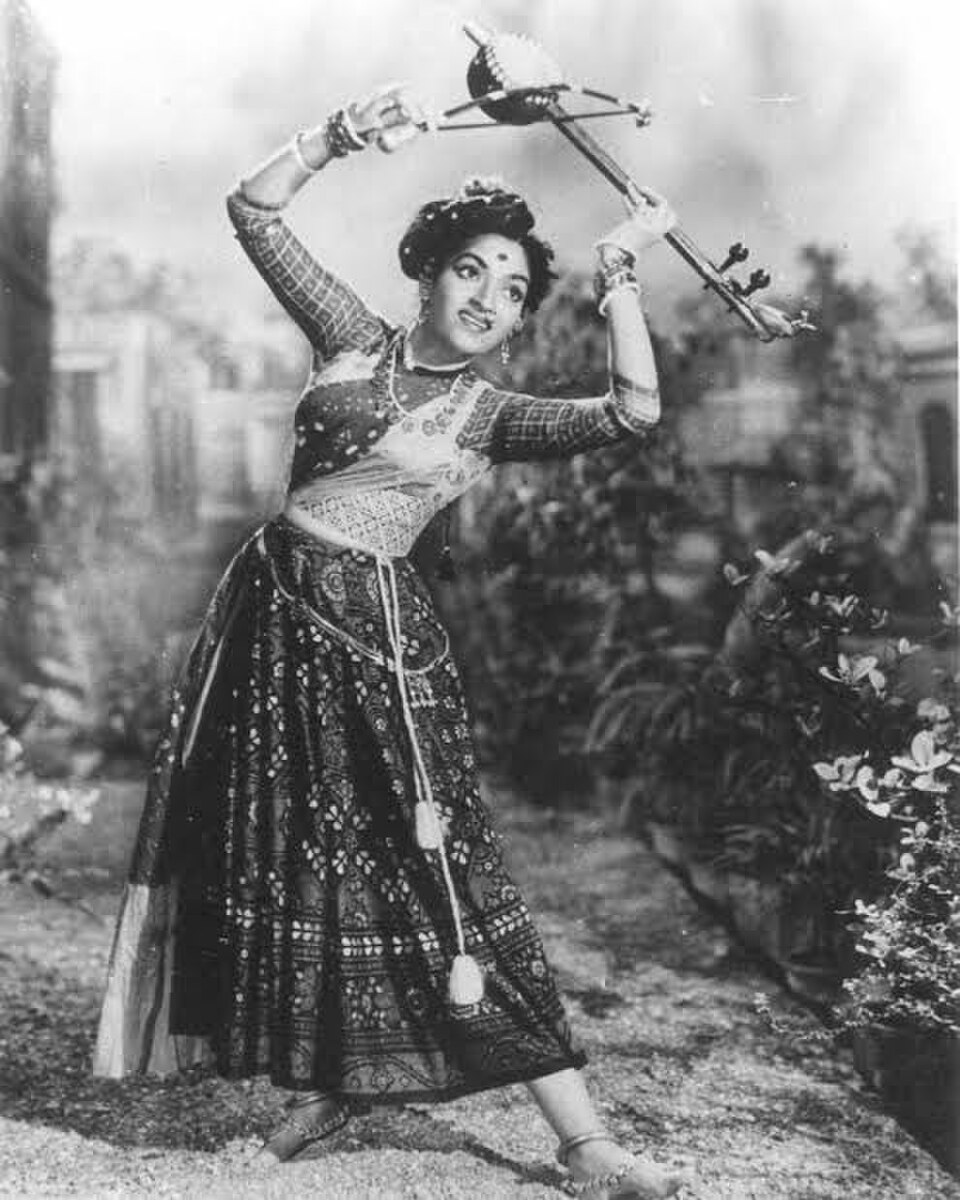
I loved that the movie conveyed beautiful messages through various emotionally charged scenes. Hard work can accomplish anything. When we focus on a worthy cause, it increases our chances of success. I cried buckets in the final scene where the six prisoners, who are now reformed, decide to continue to live on the farm, believing that Adinath’s eyes are watching over them. Hence the name Two Eyes Twelve Hands. The movie ends with Adinath’s favorite prayer song, “Ae Maalik tere bande hum.”
Whenever I listen to the song, I simply cannot control the tears. This immortal song focuses on humility, gratitude, and surrender. That humanitarianism is the best religion. When we perform good deeds, we live a happy life.
But it isn’t just the song and what it conveys that makes me emotional. It is also the ambiance of watching it with my folks, singing the lyrics together, being teased for being a crybaby when the song airs, and the influence it has had on me.
The belief that everyone can change, no matter what heinous deed they’ve committed, synchronizes with my mom’s. This is hard to accept when we are very young because it feels more instantly gratifying to retaliate to someone who has done wrong. In my case, with the years came a broader perspective and a deep belief in the Karma theory, which, in simplistic terms, conveys that what goes around comes around. Or if you want it in fewer words, tit for tat.
At 20, I ran away from home because I wanted to avoid getting married. When I returned after ten days, my mom, grandma, and college professors were the only folks who still believed in me. They forgave me. I remember when the rest of the family shunned me for what I had done, my mom responded to them by saying that she was confident I would never make such a mistake again. She believed I had learned from it.
The movie taught me many life lessons. To see the good in everyone (my mom would be so proud). And it wasn’t just in my personal life. The learning also filtered into my chosen career as a sales/training manager through the teamwork and leadership lessons I absorbed. I learned the concept of transformational leadership, where the leader works with team members to identify what the team needs and inspires change through motivation and morale-boosting. By being a role model, by encouraging people to follow their dreams, and by building better relationships through empathy.
Overall, the movie has, in many ways, shaped my attitude in life, especially because the messages I took away from it were reinforced by my mom and grandma, who I consider my mentors.
I must have listened to this song billions of times. As the song comes to an end, I find myself sobbing, missing my mom. Remembering how she held me close as I absorbed the fragrance of cooking, sandalwood soap, and jasmine flowers in her embrace.
There are many versions of this song written by the great Pandit Bharat Vyas. My favorite is the all-male version; there’s a resonance in the singing that feels like it’s vibrating through my being. In context, while watching the movie, one needs a stack of tissues to get through it.
Trivia: The film won the Silver Bear at the Berlin Film Festival. V. Shantaram was the first Indian to win the Golden Globe, as he was awarded the special Samuel Goldwyn Award in the year 1959 for this film. In India, the film won the President’s Gold Medal in 1957.
The female version, portrayed by Sandhya, starring as Champa, the toy seller in the film, is just as beautiful.
The movie is available to watch on YouTube
Thank you for reading ❤