- Step 1: Plan before you pack
- Step 2: Make safety your first priority for your new home
- Step 3: Get to know your home before shopping
- Step 4: Sort out utilities and internet early
- Step 5: Start with the big pieces
- Step 6: Add warmth with textiles
- Step 7: Set a realistic budget and stick to it
- Step 8: Bring in pieces that tell your story
- Step 9: Embrace “slow decorating”
- Step 10: Step outside — your community matters too
- Step 11: Take a breath — it doesn’t all need to happen today
- FAQ: Common Questions Answered About Setting Up Your New Home
Moving into a new home feels like a blank page — fresh, exciting, and just a little overwhelming. There’s the thrill of imagining where everything will go… and then the reality of figuring out where you packed the kettle.
This guide is your roadmap for turning chaos into calm. From the first box to the final photo on the wall, here’s how to set up your new home with less stress and more joy.
Step 1: Plan before you pack
A smooth move doesn’t start with bubble wrap. It starts with a plan.
- Decide how you’ll move. Movers save time and sore backs, but a rental truck might save money. Think about timing, distance, and how much heavy lifting you’re prepared for.
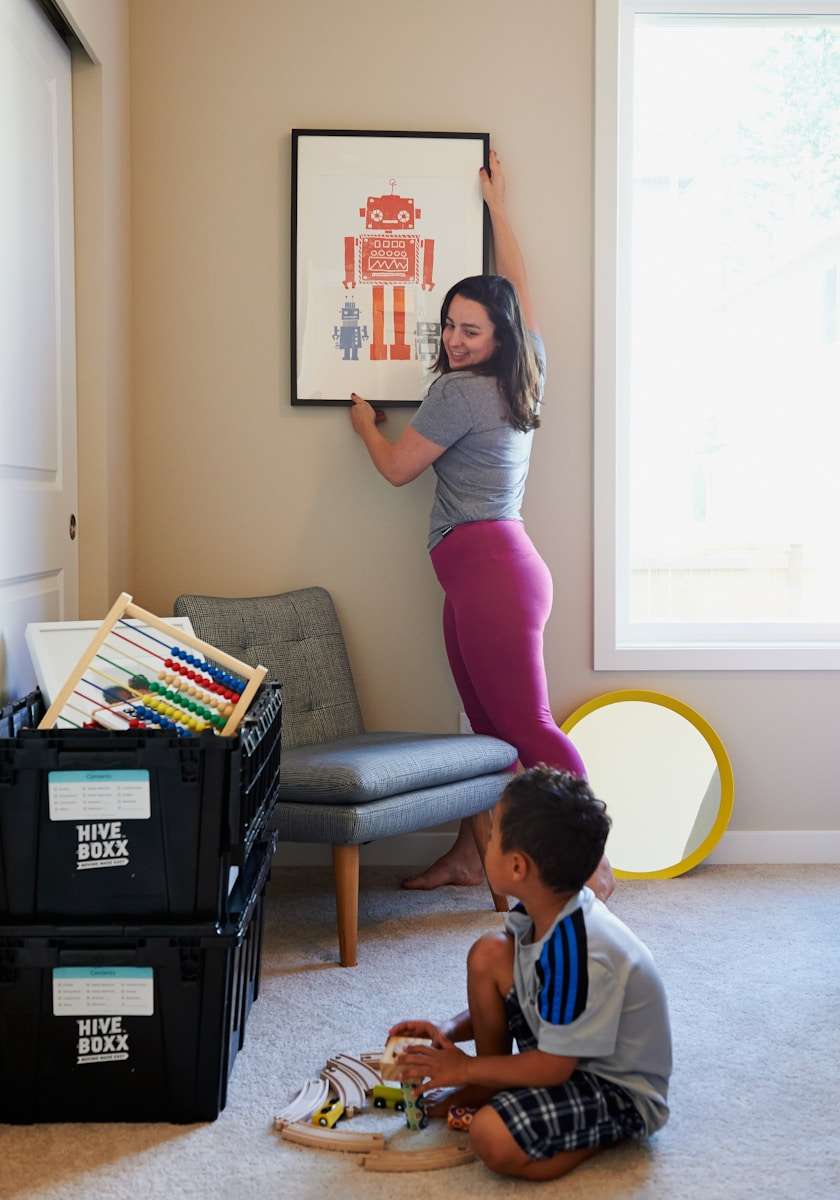
- Create a “first-night kit.” Include essentials like medications, chargers, toiletries, pajamas, snacks, and a change of clothes — basically, what you’d need if every other box stayed sealed for a day.
- Label everything clearly. Use room names and short descriptions (“kitchen – cutlery,” “bathroom – towels”) so you aren’t opening mystery boxes all week.
- Keep paperwork together. Lease, mortgage papers, insurance documents, ID — keep them in a safe folder you can grab easily.
Why it matters: A bit of organization now saves hours of frustration later. You’ll thank yourself when you’re tired, hungry, and can actually find your toothbrush.
Step 2: Make safety your first priority for your new home
Before arranging furniture, secure the essentials.
- Change the locks. You never know how many copies are floating around.
- Test smoke and carbon monoxide detectors. Working detectors are proven lifesavers. Replace batteries if needed.
- Check basic safety items. Fire extinguisher? First aid kit? Flashlights? You’ll want these close at hand.
- Walk the perimeter. Check fences, gates, outdoor lighting, and windows to make sure everything closes and locks properly.
Tip: If you’re renting, clear any major changes like new locks with your landlord first.
Step 3: Get to know your home before shopping
The urge to decorate immediately is strong, but slow down.
- Take measurements. Every door, wall, and awkward corner. Buying furniture that doesn’t fit is an expensive headache.
- Notice the light. Morning sun or evening shadows change how colors and fabrics look. Jot down which rooms get which kind of light.
- Think about traffic flow. Where do you naturally walk? Is there space for doors to open fully? How will furniture placement affect movement?
- Assess storage. Check closets, cabinets, and shelving. This helps you decide if you need extra storage pieces or if you can rework existing space.
Pro move: Sketch a rough floor plan or use an app to visualize layouts before committing to purchases.
Step 4: Sort out utilities and internet early
Nothing slows down the “new home” excitement like arriving to no power or Wi-Fi.
- Transfer or start new utility accounts. Arrange electricity, water, and gas before moving day so they’re on when you arrive.
- Schedule internet installation. Appointments can book up fast, so call the provider as soon as you have your move-in date.
- Update your address. Banks, subscriptions, and delivery services all need to know where to find you.
Getting these done ahead of time means you can settle in smoothly, and stream something to unwind that first night.
Step 5: Start with the big pieces
Think of furniture as your home’s skeleton — the structure everything else depends on.
- Prioritize the sofa, bed, and dining table. These are used daily and anchor your spaces.
- Stick to versatile colors. Neutrals like beige, gray, or cream are easier to refresh with new cushions, art, or rugs later.
- Mix smart spending. Splurge on long-term pieces (a good mattress) and save on accents (side tables, lamps).
Why it matters: Once the key pieces are in place, the rest of your decorating decisions fall into line.
Step 6: Add warmth with textiles
Bare floors and empty walls make even the nicest house feel cold. The cure: textiles.
- Layer rugs. A large rug under the sofa or bed instantly makes a space more inviting.
- Choose natural fibers. Wool, cotton, and linen look beautiful, feel good, and age well.
- Mix textures. Think soft throws, chunky knits, linen curtains, and cushy cushions.
Textiles don’t just look good — they soften sound, add comfort, and make your home feel lived in from day one.
Step 7: Set a realistic budget and stick to it
Setting up a new home can be surprisingly expensive if you don’t keep track.
- Break your budget into categories. Big items (sofa, bed), smaller items (lamps, curtains), and “nice-to-haves” (art, plants).
- Prioritize quality where it counts. A solid dining table will outlast five flimsy ones.
- Plan for extras. Tape, light bulbs, cleaning supplies, curtain rods, bins — small costs add up quickly.
A clear budget keeps you from overspending on things you don’t need and underinvesting in the pieces you’ll use daily.
Step 8: Bring in pieces that tell your story
This is when your new home stops looking like a furniture catalog and starts looking like your home.
- Frame and hang your favorite photos.
- Stack books you love on coffee tables or shelves.
- Display meaningful souvenirs or gifts — the small bowl from your grandmother, the print you bought on a trip, the pottery you made in a class.
These items don’t just decorate; they remind you who you are and what you love.
Step 9: Embrace “slow decorating”
Your home doesn’t need to be “done” in a week.
- Collect slowly. Wait to buy things you truly love instead of rushing to fill space.
- Let rooms evolve. Living in a space often changes how you want to use it.
- Skip “filler” pieces. Temporary items often stick around for years and don’t add much joy.
Think of your home as a long-term project — one that grows with you over time.
Step 10: Step outside — your community matters too
Setting up a new home isn’t just about what’s inside the walls.
- Say hello to the neighbors.
- Visit the local market, coffee shop, or park.
- Join a community event, class, or online neighborhood group.
Building these small connections helps a strange place feel familiar faster, and gives you a sense of belonging that furniture alone can’t create.

Step 11: Take a breath — it doesn’t all need to happen today
Moving is exhausting. You’ll lose your scissors (twice), misplace the tape, and order more takeout than you planned.
But each small step in setting up your new home — hanging a photo, laying down a rug, finding the mugs — brings you closer to that moment when you look around and think: “Yes. This is home.”
FAQ: Common Questions Answered About Setting Up Your New Home
What’s the very first thing to do in a new home?
Change the locks, test safety devices, and unpack your “first-night kit” — it sets you up for a calmer start.
How do I choose the right furniture?
Start with the foundation pieces — sofa, bed, dining table — then layer in smaller items once the basics are sorted.
Why are textiles so important?
Rugs, throws, and curtains add comfort, color, and texture — they make a space feel instantly warm and welcoming.
Can I actually decorate on a budget?
Of course! Prioritize big pieces, mix splurges with affordable finds, and leave room for unexpected costs.
How do I make my home feel truly “mine”?
Bring in personal items — photos, books, souvenirs, art — things that carry memories and meaning.