- Start With the Purpose of the Fence
- Match the Fence to the Property Layout
- To Choose a Fence, Choose Materials Based on Daily Use
- Balance Privacy, Airflow, and Light
- Plan for Pets, Children, and Pool Areas When You Choose a Fence
- Give Gates Their Own Design Plan
- Prepare for North Texas Weather and Maintenance
- Check Rules, Easements, and Records First
- Compare Estimates Beyond the Bottom Line
- A Simple Fence Selection Checklist to Choose a Fence
- Common Questions When You Choose a Fence
- Choose the Life of the Property
A fence should do more than frame a yard. It may need to create privacy, contain pets, protect children, define acreage, improve security, or make everyday access easier. To choose a fence begin with the job the fence must perform, rather than simply choosing the style that looks best in a photo.
For property owners comparing local installation options, fence company in Nevada TX is a useful starting point through 326 Construction, a Nevada, Texas-based, family-owned contractor that installs custom wood privacy fences, pipe and steel fencing, chain link, wrought iron, and custom gates.
Its work across Collin County communities such as Nevada, Lavon, Josephine, Farmersville, McKinney, and surrounding North Texas areas gives the company practical experience with both residential yards and larger rural properties.
Start With the Purpose of the Fence
When you choose a fence, write down the primary purpose before considering materials. A backyard privacy fence has different requirements than a front entry fence, a livestock boundary, a pool enclosure, or a dog run. Some properties need multiple fence styles. For example, a family may want a solid fence behind the home for privacy and an open metal fence in front to preserve curb appeal and visibility.
Also consider how the property will be used several years from now. A gate that works for foot traffic today may be too narrow for a trailer, riding mower, or service vehicle later.
Match the Fence to the Property Layout
Lot size, slopes, trees, drainage routes, driveways, alleys, utility areas, and existing structures all affect the design. On sloped ground, a fence may be installed in stepped sections, with panels following a stair-step pattern, or racked so the rails follow the grade. Each approach changes the appearance and the size of gaps near the ground.
Never rely solely on an old fence, landscaping edge, or verbal assumption to establish a boundary. Review a current survey or reliable property records, identify easements, and request utility locations before post holes are dug. A well-designed fence can still create problems if it blocks drainage or crosses a recorded access area.
To Choose a Fence, Choose Materials Based on Daily Use
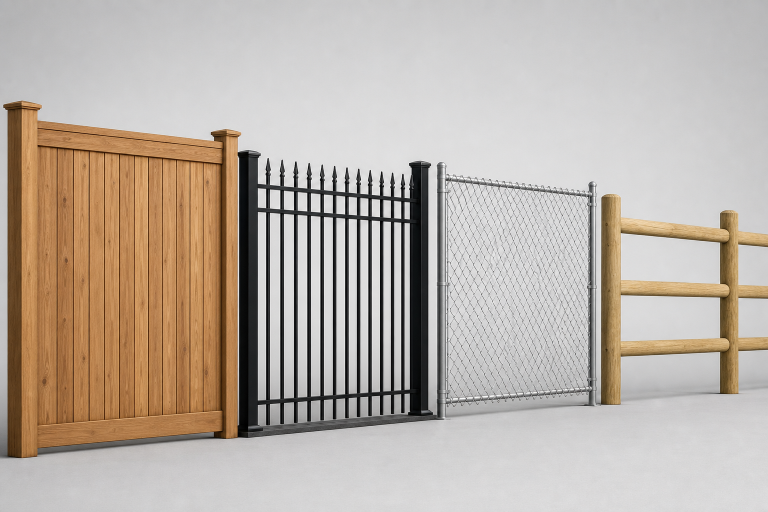
- Wood: A flexible choice for privacy, decorative patterns, and natural curb appeal. Wood may need periodic staining or sealing, as well as inspections for fading, loose fasteners, and moisture damage.
- Pipe and steel: Often suited to acreage, ranch entrances, livestock areas, and security-focused layouts. It offers strength and open views, but typically does not provide backyard privacy on its own.
- Wrought iron: Delivers a formal, decorative appearance with visibility and durable security. It can work especially well in front yards, pool areas, and entry gates.
- Chain link: A practical option for pet containment, side yards, large runs, and budget-conscious projects. Privacy slats or landscaping can soften its appearance where needed.
- Ranch-style fencing: Open rails help define larger properties without closing off views. It is often paired with wire mesh when smaller animals must be contained.
Balance Privacy, Airflow, and Light
A tall solid fence creates seclusion, but it can reduce airflow and make a compact yard feel more enclosed. Board-on-board and shadowbox styles provide coverage while allowing some movement of light and air. Horizontal boards, intentional spacing, or partial-privacy sections can also give a modern look without turning every boundary into a solid wall.
Landscaping can add privacy without increasing fence height. Shrubs, ornamental grasses, climbing plants, and strategically placed trees can screen selected views while retaining a more open feel.
Plan for Pets, Children, and Pool Areas When You Choose a Fence
Fence height is only one part of containment. Look for gaps under gates, wide picket spacing, climbable rails, damaged sections, and soft ground where a dog may dig. Walk the planned fence line at a child’s or pet’s eye level to spot escape routes that are easy to miss from a standing position.
Near pools, play spaces, and high-traffic areas, gate hardware deserves special attention. Self-closing, self-latching gates and properly placed latches can improve day-to-day safety. Verify all applicable pool-barrier requirements before choosing materials, height, and gate hardware.
Give Gates Their Own Design Plan
Walk gates, double gates, driveway gates, and equipment-access gates have different needs. Determine the required width, swing direction, clearance from vehicles, latch placement, and frequency of gate use before construction begins. Heavy gates may require reinforced frames, stronger posts, and specialized hinges.
- Will a trailer, mower, or emergency vehicle need to enter?
- Could the gate swing into a sidewalk, street, or tight driveway?
- Should the gate blend into the fence or serve as a distinct entry feature?
Prepare for North Texas Weather and Maintenance
Strong sun, heat, wind, heavy rain, and changing moisture levels can affect every outdoor material. For wood, watch for surface checking, fading, softened posts, and loose nails or screws. For metal, inspect coatings, welds, connections, and early rust spots. Chain link should be checked for bent fabric, loose tension, damaged coating, and gates that no longer align.
Inspect the fence at least twice a year, especially after severe storms or extended rainy periods. Keeping water from standing around posts and correcting small issues early can prevent larger repairs later.
Check Rules, Easements, and Records First
Fence requirements can vary by city, county, subdivision, and homeowners’ association. Confirm height limits, setbacks, corner-lot visibility rules, permit needs, floodplain restrictions, and recorded covenants. For example, the City of Dallas explains permit and inspection basics that can differ for interior and corner lots.
State law can provide useful background through Texas Property Code Chapter 202, but local rules and association restrictions may still control the final design. No permit requirement does not mean no rules apply.
Compare Estimates Beyond the Bottom Line
Written estimates can vary due to terrain, access, demolition, post depth, soil conditions, material grade, gates, and cleanup. Compare the scope, not just the total price. Confirm whether each estimate includes old fence removal, disposal, layout work, concrete, post materials, gate hardware, protective finishes, final adjustments, and site cleanup.
A Simple Fence Selection Checklist to Choose a Fence
- Identify the main purpose: privacy, containment, security, appearance, or property definition.
- Mark areas that need open views, full privacy, gates, or pet protection.
- Measure approximate fence runs and note slopes, trees, drainage, and structures.
- Review surveys, easements, local rules, HOA requirements, and pool-safety standards.
- Choose a material that fits the desired maintenance level and long-term budget.
- Compare detailed written estimates before selecting an installer.
Common Questions When You Choose a Fence
What is the best fence for privacy?
Solid wood, board-on-board, and certain modern panel systems can provide strong privacy. The best fit depends on appearance, maintenance expectations, budget, wind exposure, and local height restrictions.
What fence works best for dogs?
The answer depends on the dog’s size, jumping ability, digging habits, and temperament. Evaluate spacing, gate security, ground clearance, and climbable features in addition to height.
Is metal fencing better than wood?
Neither is universally better. Metal often provides strength, visibility, and lower routine maintenance, while wood offers more privacy and design flexibility.
Should a fence go on the property line?
Confirm the boundary before building. A survey and early communication with neighbors can help avoid costly relocation or shared boundary disputes.
Choose the Life of the Property
A successful fence balances purpose, material, layout, maintenance, safety, access, and local requirements. The most attractive option when you choose a fence is not always the most practical, and the lowest initial price may not deliver the best long-term value. Thoughtful planning helps create a boundary that works for privacy, pets, property access, and everyday life in North Texas.