
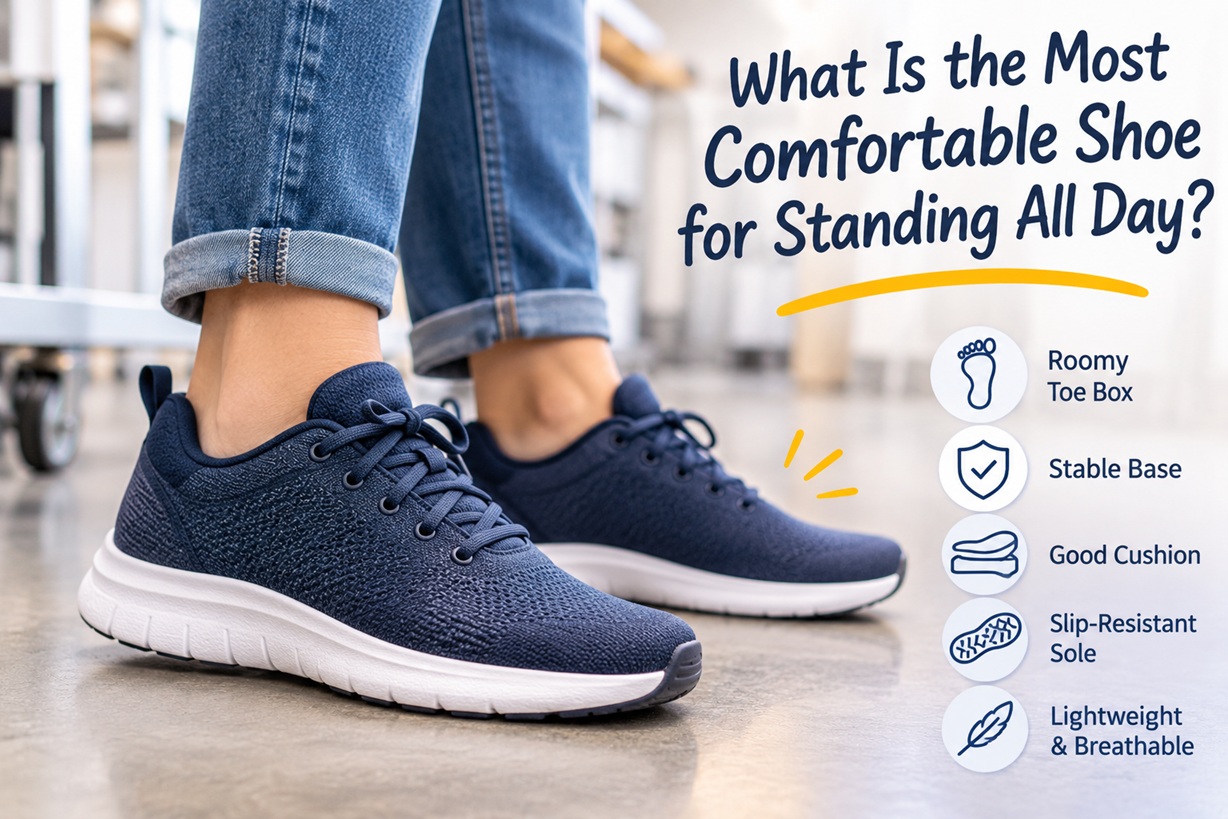
Hour one, your shoes feel fine. Hour six, every step reminds you that feet were not built for polished concrete.
If you stand at a register, a nurse’s station, a salon chair, or a stove, you’ve probably asked it: what is the most comfortable shoe for standing all day? Most lists answer with ten brand names. My honest take is simpler. The best shoe is the one built around your foot, your floor, and your shift.
Let’s work out which one that is for you.
The Short Answer: Fit Beats Brand
For many people, standing still feels harder than walking. When you walk, your muscles take turns. When you stand, the same ones hold the load for hours, and your feet slowly swell.
That’s why a shoe that felt perfect in the store at 11 a.m. can pinch by 4 p.m. The logo on the heel matters far less than three things: how much room your foot has, how stable the base feels, and how well the sole grips.
Try this tonight. Pull the insole out of your current work shoes and stand on it barefoot. If your toes hang over the edges, you’ve found your first problem.
What the Most Comfortable Shoe for Standing All Day Has in Common
Different shoes suit different people. Still, the comfortable ones share a short list of traits:
- A roomy toe box. Your toes should spread without touching the sides. Cramped toes are the fastest route to an aching forefoot.
- A wide, stable base. A sole that is wide under your heel and forefoot keeps you from wobbling. Wobbling makes small muscles work all day.
- The right amount of cushion for you. Some people love thick foam. Others feel unstable on it. Neither camp is wrong.
- Real grip. Rubber outsoles hold on tile, spills, and wet entryways. Leather soles don’t.
- A removable insole. If you wear orthotics, you need room to swap them in.
- The right upper for your mess. Mesh breathes. Leather and coated fabrics wipe clean.
If you want to explore how fit, cushioning, and sole flexibility affect footwear comfort, take a look at 5 key features that improve comfort in walking boots.
Notice what’s missing from that list: price. A $150 shoe that squeezes your toes will lose to a $90 shoe that fits.
Soft Foam or Barefoot Style? Choose Your Camp
This is the real debate, and most shopping lists skip it.
Max-cushion shoes feel amazing on the first try. Thick foam softens every step on hard floors. The catch is that foam compresses over months of daily wear, and the comfort fades quietly. Very tall soles can also feel tippy when you shift your weight.
Barefoot-style shoes go the other way. They use a thin, flexible sole, a flat heel-to-toe profile (often called zero drop), and a toe box shaped like an actual foot. Fans say their feet feel less cramped and more stable on the ground. If you work around wet floors, options like the non-slip barefoot work shoes from Rutsu Barefoot pair that foot-shaped fit with a slip-resistant rubber sole and a water-repellent upper.
So which camp? I’d lean barefoot style if your toes always feel squashed. I’d lean cushion if you walk long distances on concrete and your feet aren’t used to thin soles.
One honest warning about switching: go slowly. Wear minimal shoes for half a shift at first, because your calves and arches need a few weeks to adapt. If you have a foot condition, talk to a podiatrist before you change.
Match the Shoe to Your Floor
Your floor changes the answer more than most people realize.
- Kitchens and restaurants: grip comes first. Grease and water turn a slick sole into a hazard, so look for slip-resistant rubber and an upper that wipes clean.
- Hospitals and clinics: you get long hours on smooth floors, plus spills and cleaning products. Washable materials and removable insoles help.
- Retail and warehouses: concrete and long aisles reward a stable, durable sole. If anything heavy could fall on your feet, you need certified safety-toe footwear instead.
- Offices and classrooms: dry floors and a dress code. A dark, plain shoe with room for your toes covers both.
Check your employer’s footwear policy too. Some workplaces require a specific slip rating or a safety toe.
The End-of-Day Test Before You Buy
Here’s the two-minute test I’d run before trusting any pair:
- Shop late in the day. Your feet are at their largest after hours of standing.
- Leave a thumb’s width of space in front of your longest toe.
- Stand still for two minutes. Don’t stroll the aisle. Stand the way you stand at work and notice where pressure builds.
- Wear your work socks when you try them on.
Choosing the right fit is important whenever you buy footwear. You can also read When You Buy New Shoes, Wear Them Well! for more practical advice on choosing shoes that suit your needs.
Once you find a pair, buy two if you can. Rotating shoes lets each pair dry out between shifts, so both last longer.
Your next step: tonight, run the insole test on the shoes you already own. If your toes spill over, put toe room at the top of your list when you shop.

Frequently Asked Questions About the Best Shoe for Standing All Day
Are Skechers or Crocs good for standing all day?
They work for some people. Soft foam feels great at first, but check that the toe box is wide enough and the sole grips your floor. Comfort on day one doesn’t guarantee comfort in month six.
Are barefoot shoes good for standing all day?
Many people find them comfortable once their feet adapt, especially people with wide feet or cramped toes. Ease in over a few weeks. If you have plantar fasciitis or another foot condition, ask a podiatrist first.
How often should I replace shoes I stand in all day?
Replace them when the tread looks worn, the foam feels flat, or your feet start aching again. With daily standing, that often happens within a year. Rotating two pairs stretches it.
Should work shoes be a size bigger?
Not by default. Fit them at the end of the day, in your work socks, with a thumb’s width of space at the toe. Go too loose, and the rubbing becomes its own kind of misery.




Be First to Comment